As a community-based performance artist, I find the act of sharing the process equally important to the act of sharing the final product.
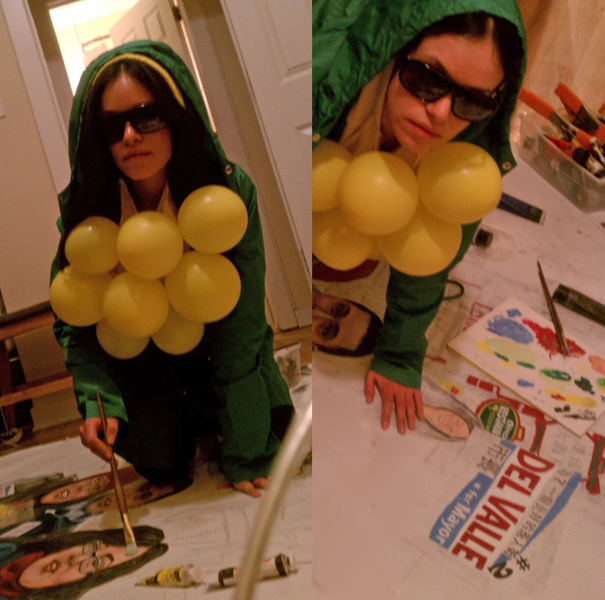
Here are images from the last week of the #delValleMural unfolding.


As a community-based performance artist, I find the act of sharing the process equally important to the act of sharing the final product.
Here are images from the last week of the #delValleMural unfolding.
AM and I are applying to another residency!
Unlike our current Wonder Woman Residency, where we applied as Escobar-Morales, this particular program does not accept joint proposals. So we are submitting seperately and hoping (and hoping and hoping) we will both be accepted.
I am applying to the #InternetArt section.
And she is applying to the Photo section.

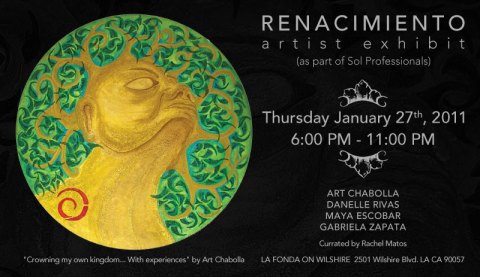
RENACIMIENTO is curated by Rachel Matos.
When addressing the topic of duality and rebirth one must think of the two connected through the process of transformation. The initial duality perhaps emerging out of conflicts in accordance to the individuals own internal precepts and colored by the knowledge of their external experiences leads to this transformation, which bares a reawakening or rebirth.
The artists in Renacimiento share their personal journey through stories of cultural identity, conflictual relationships and the transcendence from their ancestry. In lieu of the new year, it is an introspective view of how we all change and seek to change – Rachel Matos

el es frida kahlo is from the series Obsessed with Frida Kahlo
As a Latina artist I will forever be tied to Frida Kahlo in some way. Frida Kahlo is the reference between who Latina artists want to be, and who everyone else expects us to be. Whether I am mimicking her style, her persona, or trying to escape the embedded attachment between myself and the late painters’ legacy, I will still be connected to Frida Kahlo.
Frida Kahlo constructed her identity though her public persona. Kahlo’s attitude, personal traumas, sexual escapades, clothing, and political affiliations, all informed her body of work. Now regarded as the number one female artist in Mexico, Kahlo’s image has become so embedded in popular culture that when one looks at one of her self portraits one automatically thinks about her tragic bus accident, her tumultuous relationship with Diego, and her bisexuality. Kahlo inscribed her identity, painting her image over and over, constructing a mythology around her persona.
In el es frida kahlo, I stand before a reproduction of one of her paintings. With a mixture of rage, anxiety, and complete fear, I chant “el es Frida Kahlo, ella es Frida Kahlo, el es Frida Kahlo, yo soy, yo soy, yo soy Frida Kahlo,” he is Frida Kahlo, she is Frida Kahlo, I am, I am, I am Frida Kahlo. As I yell, the painting behind behind me begins to fall. I violently tear down my braids and smudge off my makeup while continuing yelling “I am Frida Kahlo, I am Frida Kahlo, yo soy Frida Kahlo!”

Tomorrow I turn 27. And everyone keeps asking me what I want, what I need. Things may be tight, but I have what I need: a roof over my head, food to eat, an adoring husband and wonderful family and friends.
But what I want more than anything, is to be able to go to Texas with my collaborator Andria Morales. She and I were just accepted to the 2011 National Popular Culture Association Conference in San Antonio Texas, where we will be presenting our self portrait dialog exchange project Are You My Other? We are thrilled about this opportunity and think it is the perfect place to situate our work. But after totaling our expected expenses, we realized that collectively we need to come up with $1,500 just to make it happen.
So Andria and I are launching our first-ever Are You My Other? fundraising campaign Taking it to Texas. In exchange for donations, we are offering Are You My Other? goodies, alongside favorites from our individual bodies of work… but at a fraction of the price!


Acciones Plásticas in Fringes – Jewish Art as an Israeli Periphery
שוליים – אמנות יהודית כפריפריה ישראלית
by David Sperber
The publication “Fringes – Jewish Art as an Israeli Periphery” is a continuation of a series of publications published under the auspices of the Leiber Center of Bar-Ilan University. The series focuses on research and documentation of contemporary Jewish art discourse in Israel. The series in general, and the current volume in particular, aim at sketching broad guidelines for topics pertinent to the field of Jewish art within the Israeli sphere.
The basic hypothesis of the current edition is that Judaism is conceived as a “subterranean” element of Israeli culture. The discussion considers the viability and elasticity of distinctions between the religious and the secular. This perspective favors a harmonic understanding, by which religiosity and secularism are not opposites, but rather intertwined inseparable concepts. Alongside the discussion concerning canonical artists, this publication relates mainly to peripheral tendencies and non-mainstream artistic groups, aiming to reveal their qualities as well as their limitations.


Fringes — Jewish Art as an Israeli Periphery
published by Leiber Center of Bar-Ilan University
I am Midwestern girl, born and bred.

Yes, I know there is a New York Art World.
And yes, I am aware that people make cultural identity work on the West Coast.
But I am rooted here.
With the world at my fingertips.
AM and I visit each other’s Studios on Are You My Other?
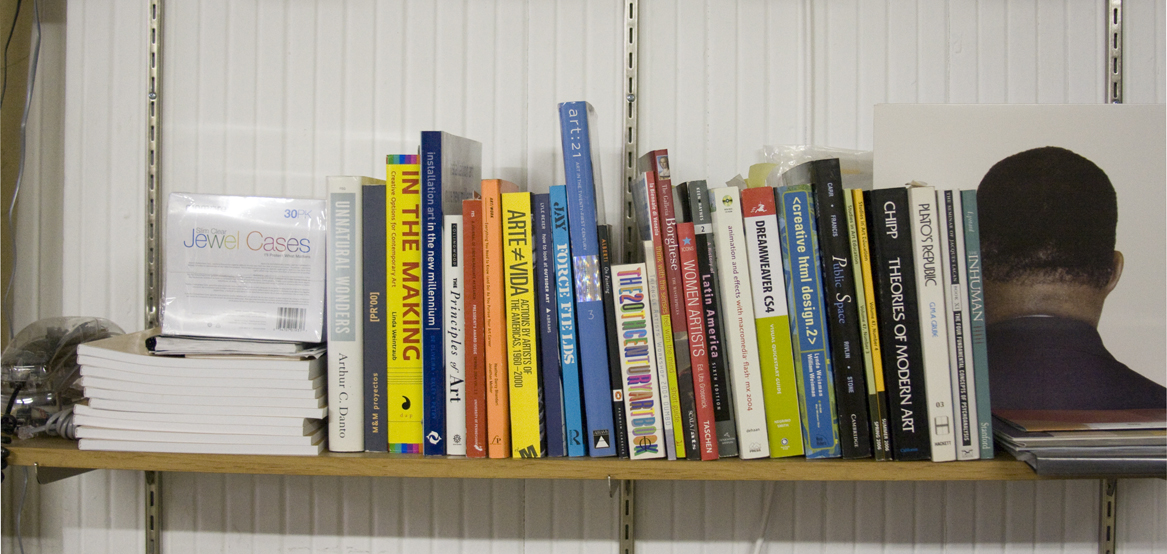
AM studio

ME Studio
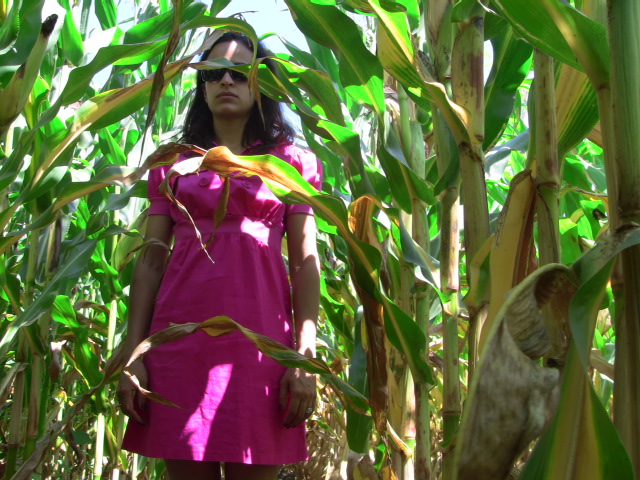
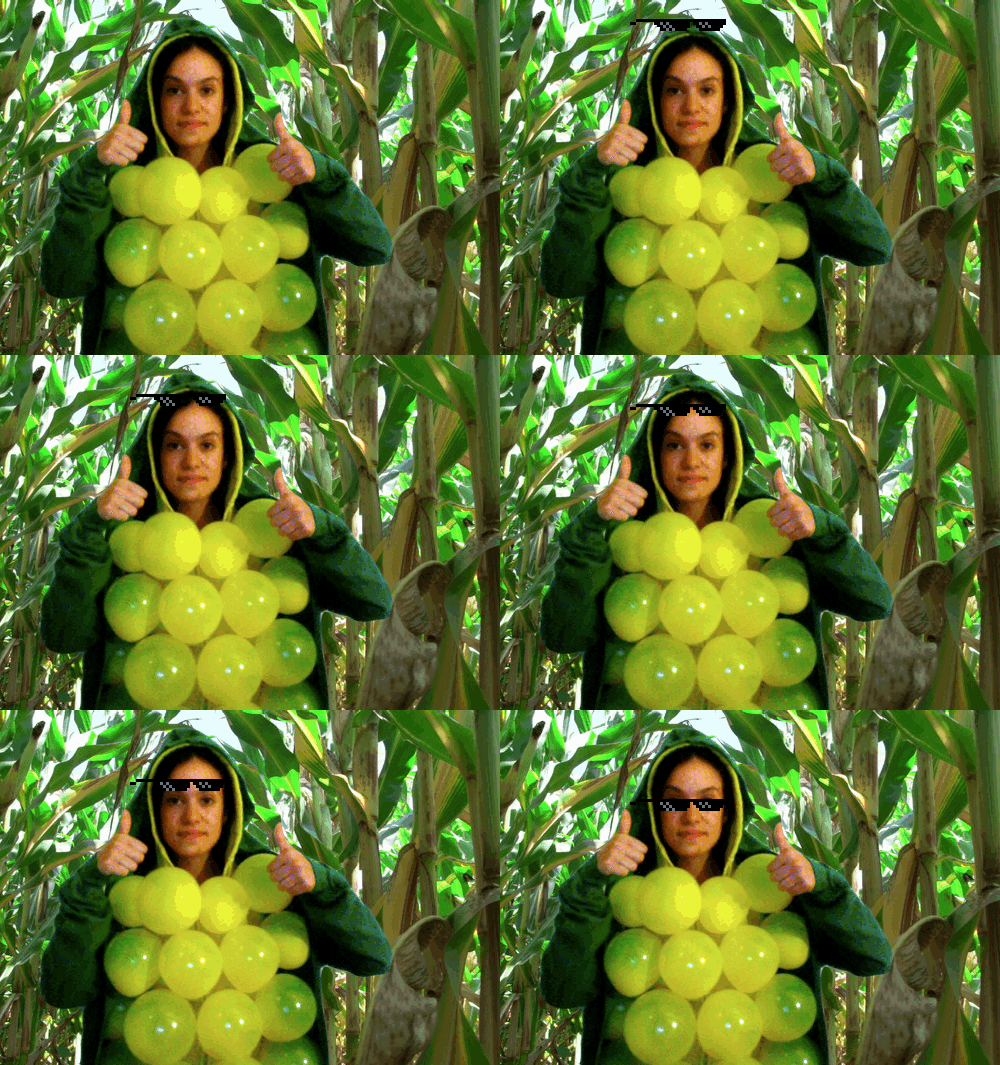
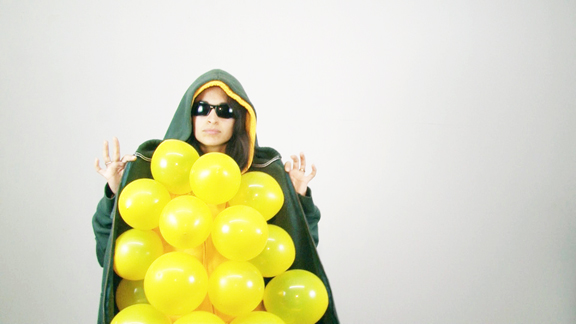
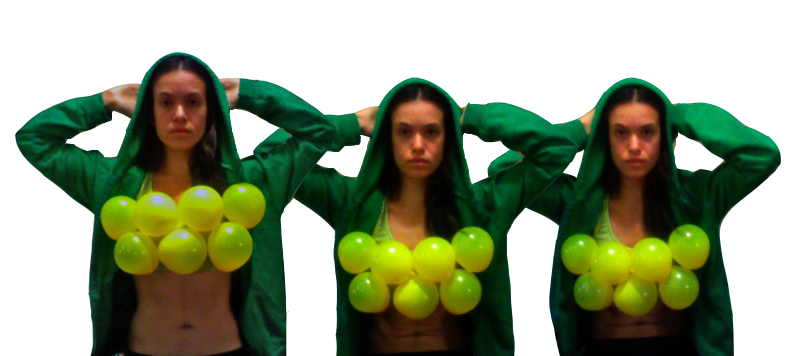
The Fat Free Elotera is a (developing) character on Are You My Other? The Battle Between The Self and The Other, an ongoing self-portrait dialog exchange project, produced by myself (ME) and Philadelphia-based performance and installation artist Andria Morales (AM). Through a series of weekly exchanged blog posts, Andria and I publicly negate, deconstruct, and reconstruct our individual histories, identities, and conceptions of self.

Click on images below to experience the creation of our latest persona.






have you been kiruv‘d lately?
